Planning for change: Tidal inundation in the Tweed
Tweed Shire Council is taking a proactive approach to protecting our coastal areas and communities. We’re using the latest research and data to better understand and plan for the impacts of coastal hazards, including tidal inundation — the flooding of low‑lying land during high tides as sea levels rise.
As part of this work, we plan on integrating tidal inundation risk into Council’s land use planning tools so future development can respond to changing conditions.
Why are we doing this?
Under the Coastal Management Act 2016, Council must assess coastal hazards and prepare Coastal Management Programs (CMPs) that set a long‑term plan for managing the coastal zone. CMPs can recommend changes to zoning, policies and development controls.
Council’s CMPs (Tweed River Estuary – 2018, and Coast and Estuaries – currently underway) have assessed the likely impacts of tidal inundation on low‑lying land as sea levels rise. These programs include actions to inform the community and update Council’s land use planning framework to plan for this hazard.
Preparing early helps us make informed decisions about development, infrastructure and coastal management to reduce future risks and improve resilience.
Project stages
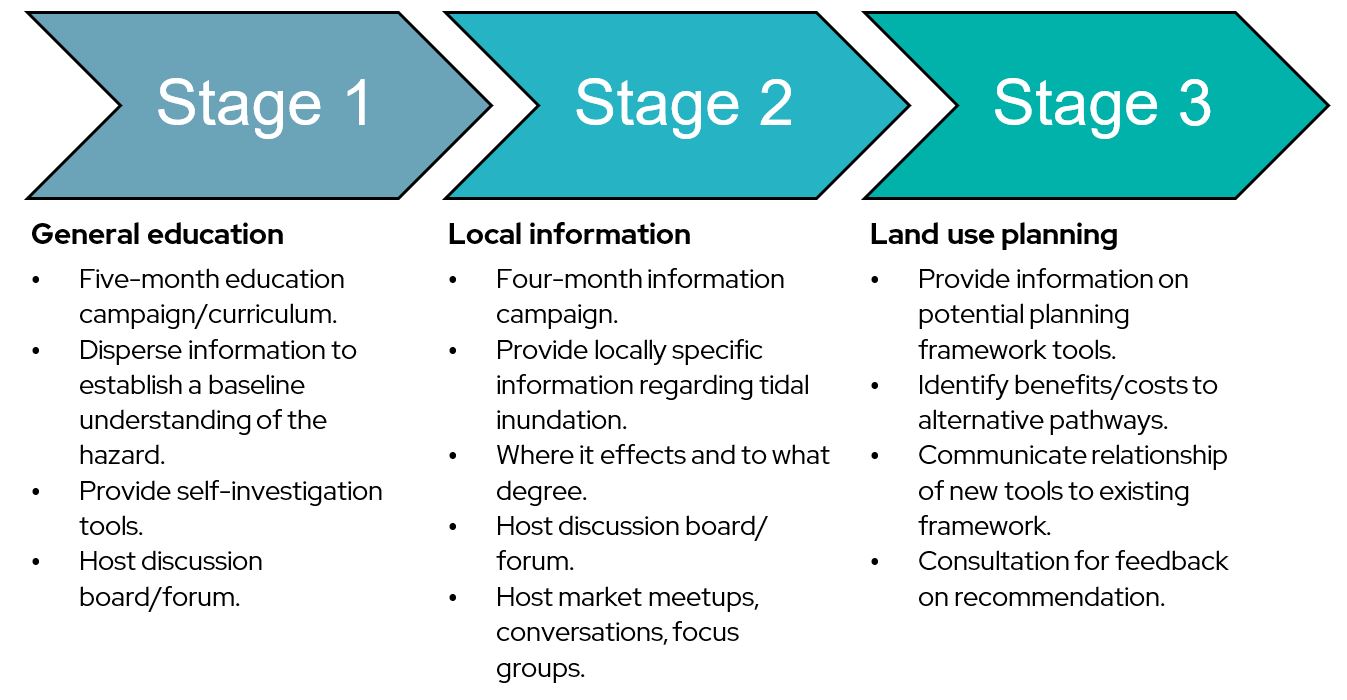
Over the coming months, this Your Say Tweed Project page will host information, discussion and question boards, project updates and key dates for engagement with staff regarding the Coastal Risk Planning Update project (The Project). The project will involve a gradual rollout of Fact Sheets with opportunities to meet with staff over three key stages:
Tidal inundation versus catchment flooding - what's the difference?
Tidal inundation is different to the catchment flooding which we often experience in the Tweed. Find out more below:
Tidal inundation is gradual and persistent (as opposed to fast and dangerous), as inundation events driven by high tides. It can occur whether or not it has rained and can cause water to linger in low-lying areas and impact drainage systems ability to function properly.
Catchment flooding can be dangerous, with fast-moving deep water that often arrives quickly and can damage roads, bridges and property.
Tidal inundation is not yet a severe hazard in Tweed. However, sea level rise predictions for the next 100 years suggest that much of Tweed Shire's low lying areas could be affected.
Catchment flooding has always been the primary flood threat in Tweed.
How you can get involved
This platform is the place to learn about tidal inundation, understand how it may affect parts of the Tweed, and have your say.
Here, you can:
follow the project as it progresses
read updates and fact sheets
ask questions and join the discussion
review and comment on the future Planning Proposal.
Check the Documents tab for fact sheets, submit a question or share your thoughts in the discussion board below.
Tweed Shire Council is taking a proactive approach to protecting our coastal areas and communities. We’re using the latest research and data to better understand and plan for the impacts of coastal hazards, including tidal inundation — the flooding of low‑lying land during high tides as sea levels rise.
As part of this work, we plan on integrating tidal inundation risk into Council’s land use planning tools so future development can respond to changing conditions.
Why are we doing this?
Under the Coastal Management Act 2016, Council must assess coastal hazards and prepare Coastal Management Programs (CMPs) that set a long‑term plan for managing the coastal zone. CMPs can recommend changes to zoning, policies and development controls.
Council’s CMPs (Tweed River Estuary – 2018, and Coast and Estuaries – currently underway) have assessed the likely impacts of tidal inundation on low‑lying land as sea levels rise. These programs include actions to inform the community and update Council’s land use planning framework to plan for this hazard.
Preparing early helps us make informed decisions about development, infrastructure and coastal management to reduce future risks and improve resilience.
Project stages
Over the coming months, this Your Say Tweed Project page will host information, discussion and question boards, project updates and key dates for engagement with staff regarding the Coastal Risk Planning Update project (The Project). The project will involve a gradual rollout of Fact Sheets with opportunities to meet with staff over three key stages:
Tidal inundation versus catchment flooding - what's the difference?
Tidal inundation is different to the catchment flooding which we often experience in the Tweed. Find out more below:
Tidal inundation is gradual and persistent (as opposed to fast and dangerous), as inundation events driven by high tides. It can occur whether or not it has rained and can cause water to linger in low-lying areas and impact drainage systems ability to function properly.
Catchment flooding can be dangerous, with fast-moving deep water that often arrives quickly and can damage roads, bridges and property.
Tidal inundation is not yet a severe hazard in Tweed. However, sea level rise predictions for the next 100 years suggest that much of Tweed Shire's low lying areas could be affected.
Catchment flooding has always been the primary flood threat in Tweed.
How you can get involved
This platform is the place to learn about tidal inundation, understand how it may affect parts of the Tweed, and have your say.
Here, you can:
follow the project as it progresses
read updates and fact sheets
ask questions and join the discussion
review and comment on the future Planning Proposal.
Check the Documents tab for fact sheets, submit a question or share your thoughts in the discussion board below.
Please note: the question board is only for seeking clarification on the issues considered in this project. For sharing ideas, concerns or opinions on this project, please visit the discussion forum.
Planning for change: Tidal inundation in the Tweed is currently at this stage
March to July 2026
Fact sheets released about tidal inundation as a coastal hazard. These fact sheets aim to help residents gain an understanding of the causes and impacts of tidal inundation, including additional resources and at-home activities.
Locally specific information
this is an upcoming stage for Planning for change: Tidal inundation in the Tweed
August to November 2026
Local mapping released showing future inundation and a breakdown of areas, properties, assets, infrastructure and vegetation that may be impacted. Mapping will be complemented by fact sheets specific to villages and localities.
Review land use planning tools
this is an upcoming stage for Planning for change: Tidal inundation in the Tweed
February to April 2027
Council will review its planning tools to determine how tidal inundation can be integrated into the Local Environment Plan and Development Control Plan. Fact sheet will be released showing the impacts on:
exempt and complying development,
development requiring consent,
planning proposals, and
existing planning controls (DCP & LEP)
Planning Proposal
this is an upcoming stage for Planning for change: Tidal inundation in the Tweed
This stage will involve the preparation, consultation and submission of a Planning Proposal to update Council's land use planning framework to include tidal inundation.